
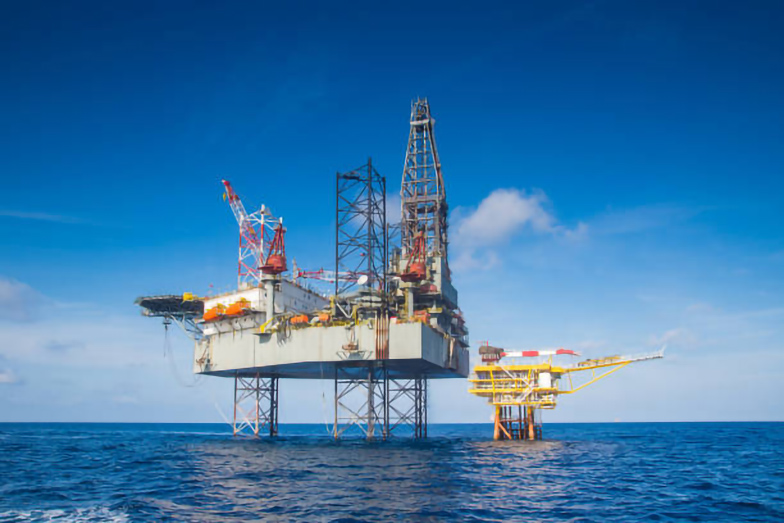
Our Approach Is Built on Precision, Stability & Absolute Process Control.
Optical Fibers Engineered for Extreme Oil & Gas Environments
Oil & gas operations demand materials that remain mechanically stable, chemically resistant, and optically reliable under extreme temperature, pressure, and vibration. Our specialty optical fibers are engineered specifically for environments where standard polymer-coated fibers rapidly degrade.
We manufacture metal-coated, spun, and custom optical fibers designed to withstand high downhole temperatures, corrosive fluids, mechanical stress, and long-term deployment. These fibers are trusted in distributed temperature sensing (DTS), distributed acoustic sensing (DAS), reservoir monitoring, pipeline integrity systems, and structural health monitoring.
By replacing polymer coatings with precisely applied metal layers, we eliminate thermal softening, chemical attack, and coating breakdown. This ensures stable signal transmission and extended service life in mission-critical oil & gas applications.
Oil & Gas Fiber Manufacturing – Reliability Without Compromise
Modern oil & gas sensing systems require components that integrate seamlessly with automated, real-time monitoring platforms. Our manufacturing processes use continuous inspection, digital process control, and statistical quality assurance to guarantee repeatability and long-term performance.
Each fiber is produced with strict control of coating adhesion, thickness uniformity, and mechanical integrity, ensuring predictable behavior under extreme operational stress.
Oil & Gas-Optimized
Fiber Engineering
Our fibers are engineered using predictive modeling of thermal expansion, mechanical fatigue, and coating adhesion to ensure stable performance in downhole tools, pipelines, surface facilities.
Certified Energy-Grade Production
All oil & gas fiber products are manufactured under controlled conditions with documented materials, process validation, and optional high-temperature and chemical compatibility testing.
Typical Oil & Gas Applications
Available Fiber Types
- Metal-coated fiber (gold, nickel, aluminum, copper) for extreme temperature and chemical resistance
- Spun fiber for high-precision distributed sensing applications
- Multi-core fiber for compact multi-channel signal routing
- Fully customized fiber designs with tailored coatings, diameters, and mechanical reinforcement
Technical Performance Summary
| Parameter | Fiber Sepcification |
|---|---|
| Coating Type | Metal coatings optimized for oil & gas (Gold, Nickel, Aluminum, Copper, Alloy blends) |
| Maximum Operating Temperature | Up to 450 °C continuous, up to 600 °C for short-duration exposure |
| Pressure Resistance | Stable performance in high-pressure downhole and subsea environments |
| Chemical Compatibility | Resistant to hydrocarbons, drilling fluids, H₂S, CO₂, acids, and solvents |
| Coating Thickness | 10 – 60 µm, application-specific customization available |
| Fiber Diameter Tolerance | ±0.3 µm standard, tighter tolerances on request |
| Tensile Strength | > 550 MPa after coating and thermal conditioning |
| Bend Radius | Down to 18× fiber diameter for robust field deployment |
| Thermal Shock Resistance | Stable under rapid temperature transitions from –40 °C to +450 °C |
| Optical Signal Stability | No measurable attenuation drift under thermal and pressure cycling |
| Hydrogen Darkening Protection | Coating acts as diffusion barrier against hydrogen ingress |
| Abrasion Resistance | Enhanced surface hardness for downhole and pipeline installation |
| Surface Cleanliness | Low-contamination surface suitable for sealed oilfield systems |
| Long-Term Aging Stability | Tested for multi-year stability in harsh energy environments |
| Custom Geometry Support | Single-core, spun, multi-core, reinforced constructions |
| Compliance Options | ISO manufacturing, oil & gas qualification protocols available |
Q&A
Metal coatings do not soften, crack, or chemically degrade like polymers. They provide superior resistance to heat, pressure, vibration, and hydrocarbons, ensuring stable signal transmission and longer operational life in harsh field conditions.
Metal coated fibers operate continuously up to 400 °C (752 °F) and can tolerate higher temperatures for short exposure periods. This makes them suitable for deep wells, geothermal reservoirs, and high-temperature process monitoring.
Yes. We customize coating materials, coating thickness, fiber diameter, mechanical reinforcement, and fiber structure (single-core, spun, or multi-core) to match the exact requirements of DAS, DTS, reservoir monitoring, and pipeline integrity systems.
Metal layers such as gold, nickel, or aluminum create a physical barrier that protects the glass fiber from exposure to corrosive fluids, solvents, hydrocarbons, and cleaning agents commonly found in oil & gas environments.
We provide optional high-temperature endurance testing, pressure resistance evaluation, chemical exposure testing, tensile strength measurement, and thermal cycling verification. These tests confirm long-term performance in downhole tools, pipelines, and surface monitoring systems.
