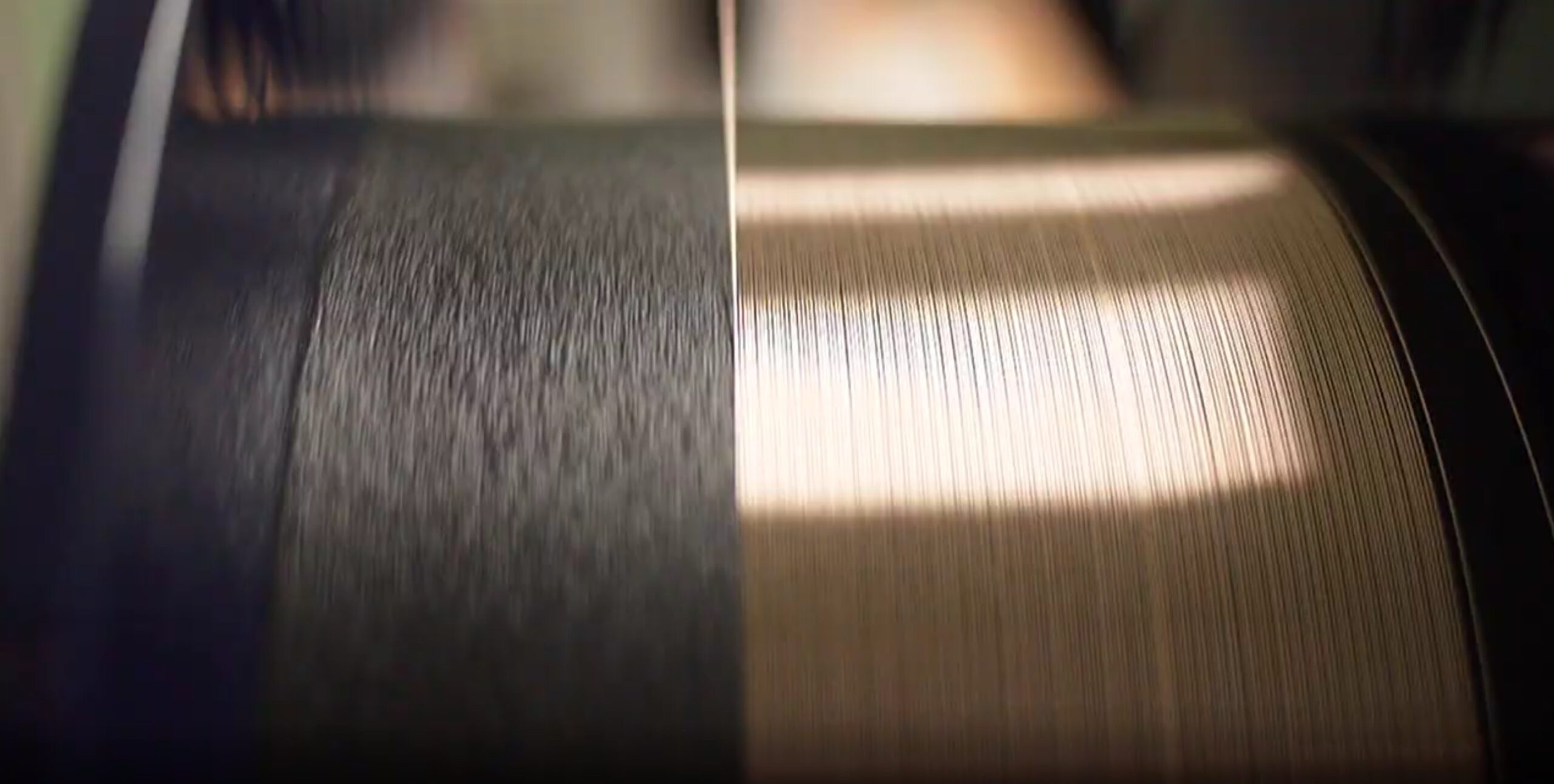
Qualifying optical fibers for particle accelerators is a detailed task. These fibers operate in extreme vacuum conditions, transmitting vital data. At Jefferson Lab, fibers work with electron beams up to 12 GeV in the GlueX detector systems.
High vacuum fibers need to meet strict standards for reliable performance. The Dalian Coherent Light Source shows the power of optical fibers with superradiant THz free-electron lasers. These lasers produce pulse energies in the millijoule range, needing top-notch fiber quality.
Choosing the right components for particle accelerators begins with knowing fiber specs. Each use has its own set of challenges, from radiation to temperature changes. Engineers must ensure their fiber qualification meets all these needs.
Testing high vacuum fibers involves several steps. Scientists check outgassing rates, signal loss, and mechanical stability under vacuum. These tests help ensure fibers perform well in the harsh environment of particle accelerators.
Key Takeaways
- Optical fibers in particle accelerators must withstand vacuum pressures below 10^-9 Torr
- Jefferson Lab’s GlueX detector demonstrates successful fiber integration at 12 GeV beam energies
- The Dalian Coherent Light Source achieves millijoule pulse energies using qualified vacuum fibers
- Proper optical fiber qualification prevents signal degradation in extreme conditions
- High vacuum fiber testing includes outgassing measurements and radiation resistance checks
- Particle accelerator components require specialized fiber coatings and materials
Understanding High Vacuum Fiber Standards
In particle accelerators, high vacuum environments need special optical fibers. These fibers must work well in vacuum levels as low as 10^-9 Torr. They also face magnetic fields up to 1.8 Tesla. This makes choosing the right materials and quality control in manufacturing very important.
Wavelength-shifting fibers like Saint-Gobain’s BCF-92 are often used. They have a 1mm×1mm cross-section, perfect for beam diagnostics. These fibers work with plastic scintillators like Eljen Technology’s EJ-212 and EJ-200. Together, they create systems that can measure particle beam characteristics well.
Silicon photomultipliers are used with these fibers at 73V bias voltage. They offer sensitive detection. It’s also key that these materials don’t outgas much to keep the vacuum clean. Testing these fibers regularly is essential to ensure they meet the strict needs of accelerators.
“The selection of appropriate optical fibers for vacuum applications can significantly impact the overall performance and reliability of particle detection systems” – CERN Technical Design Report
For vacuum use, fibers need to resist radiation, stay stable in temperatures from -40°C to +60°C, and be mechanically strong. These features help the fibers send signals accurately in tough accelerator settings where parts can’t be easily replaced.
Applications of Optical Fiber in Particle Accelerators
Optical fibers are key in particle accelerators. They help scientists measure and collect data in real-time. These fibers track how particles behave and check radiation levels with great accuracy.
One major use of synchrotron fiber is in *photon flux measurement*. At places like Jefferson Lab, fibers catch light from particle hits. This light goes through special fibers to silicon photomultipliers, turning it into electrical signals. This method catches over 90% of events and keeps timing precise.
Modern *beam monitoring systems* use optical fibers for important tasks:
- Real-time particle position tracking
- Radiation dose measurements
- Beam intensity monitoring
- Energy spectrum analysis
The benefits of using synchrotron fiber in accelerators are obvious. These fibers can handle strong radiation without losing quality. They send data fast, up to 7.5 kHz, catching quick particle events. Plus, they resist electromagnetic interference, keeping signals clear near strong magnets.
Now, *photon flux measurement* systems use bigger fiber bundles. These have active areas of 3mm × 3mm or bigger. This setup boosts light collection and cuts down on signal loss. Scientists can watch beam conditions all the time, without stopping experiments. This makes monitoring systems more dependable and affordable.
Key Considerations for Choosing Optical Fiber
Choosing the right optical fiber is a big deal. It must keep signals clear and strong, even in harsh environments. You need to find a fiber that meets your specific needs.
The range of light the fiber can handle is key. Good fibers work well with light from 1 to 20 THz. This range is vital for clear signals during particle detection. Also, the fiber must be tough enough to handle the stress of being in vacuum chambers up to 1.5 meters long.
What you need for signal processing is also important. Today’s systems use advanced electronics. These include:
- 250 MHz flash analog-to-digital converters for quick signal capture
- 12-bit resolution systems for accurate measurements
- Amplitude-weighted averaging techniques for better detector readings
- Time-walk correction methods for more precise timing
| Fiber Property | Minimum Requirement | Optimal Range |
|---|---|---|
| Spectral Transparency | 1-10 THz | 1-20 THz |
| Vacuum Compatibility | 10^-6 Torr | 10^-9 Torr |
| Temperature Tolerance | -20°C to 60°C | -40°C to 80°C |
| Radiation Hardness | 10 kGy | 100 kGy |
How you connect fibers to detectors is critical. BC-600 optical cement from Saint-Gobain Crystals is a reliable choice. It keeps connections strong, even in vacuum, ensuring clear signals.
Testing Methods for High Vacuum Fiber
Vacuum fiber testing needs special methods to make sure optical parts work well in particle accelerator settings. Engineers use advanced computer simulations to map magnetic fields around fiber setups. The TOSCA program predicts how fibers will act under strong electromagnetic forces in vacuum chambers.
Scientists check fiber quality by measuring magnetic fields precisely. Nuclear Magnetic Resonance probes track magnetic field stability with amazing accuracy. They can spot changes as small as one part in ten thousand. This ensures fibers keep their optical properties even when magnetic fields change during accelerator use.
Testing optical performance involves running detailed simulations with real detector setups. The Geant simulation software checks how fibers react to particle interactions at various energy levels. Engineers look at how fibers behave under electron beams from 3 to 6 billion electron volts. This covers the usual range for many accelerators.
Quality control teams measure several key parameters during vacuum fiber testing:
- Light transmission efficiency under vacuum conditions
- Resistance to radiation-induced darkening
- Mechanical stability at ultra-low pressures
- Temperature response in cryogenic environments
These tests help find problems before fibers are installed. Teams can find weak spots in fiber coatings or materials that might release gases in vacuum. Regular tests ensure fibers meet strict requirements throughout their life in particle accelerator facilities.
Common Issues with Optical Fiber in Vacuums
Working with optical fibers in vacuum environments is challenging. Engineers at places like CERN and Fermilab face these issues. They install high vacuum fiber systems in particle accelerators.
Material degradation from radiation is a big problem. Optical fibers near dipole magnets darken from radiation. This can cut signal transmission by up to 30% over time. Regular checks help spot these changes early.
Outgassing is another big worry in vacuum chambers. Standard optical fibers release gases that pollute the vacuum. This pollution messes with nearby equipment and can lead to false readings. Using special coatings and baking procedures helps keep outgassing low, below 10⁻⁸ Torr.
Physical stress on fiber integrity is a problem during installation and use. Temperature changes between -40°C and 80°C can cause fibers to crack. Vibrations from the accelerator add more stress. These factors lead to tiny cracks that grow over time.
- Signal loss from radiation-induced darkening
- Contamination from inadequate outgassing prevention measures
- Mechanical failure affecting fiber integrity
- Connection degradation at vacuum feedthroughs
- Temperature-related performance drift
Detection inefficiencies happen when fiber bundles and scintillator tiles aren’t aligned. Even small gaps, like 2mm, can lower detection rates by 5%. Using the right tools and regular maintenance ensures they stay aligned for accurate data.
Regulatory Standards for Optical Fiber Usage
When installing synchrotron fiber in particle accelerators, it’s key to follow safety rules. These places need optical fibers that pass tough tests. These tests keep both the equipment and people safe.
The main safety rules for these facilities include the ANSI/VITA 41.0 standards for VXS crate systems. This rule makes sure fiber optic connections work well, even in areas with lots of radiation. Before setting up synchrotron fiber, places must show they meet these rules.
- EPICS (Experimental Physics and Industrial Control System) protocols for data distribution
- High-voltage system requirements for modules operating above 1000V
- Low-voltage power specifications for control systems
- Radiation resistance testing documentation
For example, the CAEN A1535SN high-voltage modules work at 1250V. They need specific mainframe certifications, like SY1527. The Wiener MPOD system also follows strict safety rules. It gives ±5V low-voltage power and works within certain limits.
“Regulatory compliance isn’t just paperwork—it’s the foundation of safe accelerator operation and reliable data collection,” notes the International Organization for Standardization in their fiber optic guidelines.
Every facility must keep records that show their synchrotron fiber meets all safety standards. They also do regular checks to make sure they’re following the rules. These checks help find any updates needed as rules change.
Best Manufacturing Practices for High Vacuum Fiber
Making optical fibers for particle accelerators needs a lot of care and strict standards. The first step is picking materials that can handle extreme vacuum and stay clear.
Today’s makers use top-notch scintillator materials like Eljen Technology’s EJ-212 and EJ-200. These materials are carefully shaped during making. For low-energy uses, they are 1 centimeter long, 3 centimeters tall, and 2 millimeters wide. For high-energy needs, the width is just 1 millimeter.
Quality control is key in making accelerator fibers. Makers use special UV-cured adhesives, like Dymax’s, to stick light guides to photomultiplier tubes. This step needs precise temperature control and a clean room to avoid dirt.
Adding front-end electronics is also very important. Silicon photomultiplier systems give about 20 times more amplification, helping catch signals well. Every part is tested hard before being put together to meet vacuum chamber needs.
Good makers follow these key steps:
- Keep clean rooms for fiber assembly
- Test each batch for outgassing
- Record all size measurements
- Check optical transmission rates before sending
- Use tracking for quality control in making
Maintenance Tips for Optical Fiber in Accelerators
Regular maintenance keeps optical fibers working well in particle accelerators. These systems need light yield checks and calibration to work right.
Inspecting fibers involves looking at silicon photomultiplier (SiPM) pixel outputs. Each detector tile has 60 to 90 pixels. Technicians watch for light yield changes to catch problems early.
Calibration is key in maintenance. Time-To-Digital Converters need to be set just right to keep their 58-picosecond timing. Vacuum fiber tests help make sure timing signals match the 499 MHz radio-frequency pulses.
| Maintenance Task | Frequency | Critical Parameters |
|---|---|---|
| SiPM Light Yield Check | Weekly | 60-90 pixels per tile |
| TDC Calibration | Monthly | 58-picosecond bin width |
| Bias Voltage Verification | Daily | 73V from ISEG modules |
| RF Signal Monitoring | Continuous | 499 MHz frequency |
Daily checks on voltage systems are important. Even small voltage changes can hurt fiber quality and detector sensitivity. Automated systems can warn of issues, helping fix them fast.
Case Studies of High Vacuum Fiber Usage
Particle accelerator case studies show how high vacuum fiber performs well in tough research settings. These examples highlight the fiber’s ability to stay stable and precise in extreme conditions.
Jefferson Lab is a top example of fiber success. Their Hall D facility has run non-stop with the GlueX detector system. This setup uses diamond technology for important experiments. The fibers handle ultra-high vacuum and send vital data for particle detection.
The Dalian Coherent Light Source is another big achievement. It reached impressive frequency tuning from 1 to 20 terahertz. Scientists saw pulse energy grow with bunch charge, thanks to the fiber systems.
| Facility | Implementation Year | Key Achievement | Fiber Performance |
|---|---|---|---|
| Jefferson Lab Hall D | 2016 | Continuous GlueX operation | Zero vacuum degradation |
| Dalian Coherent Light Source | 2017 | 1-20 THz tuning range | Stable signal transmission |
| European XFEL | 2017 | 27,000 pulses/second | 99.9% uptime |
Advanced magnetic field setups also boosted performance. Tapered undulator designs with changing magnetic fields saw pulse energy jump by 20 to 110 percent. These results show how important the right optical fibers are in today’s accelerator physics.
Future Trends in High Vacuum Fiber Technology
The next step in synchrotron fiber technology is exciting for particle physics. Scientists at CERN and Fermilab are working on new ideas. These ideas will change how we use optical fibers in tough environments.
New materials are changing fiber optics for vacuum chambers. Lead tungstate (PbWO₄) crystal fibers help detect radiation better. They keep their signal clear even after lots of radiation.
Future plans include working at terahertz frequencies. Current systems work at 3 THz, but new ones will reach 10 THz. This requires special fiber designs.
| Technology Feature | Current Generation | Next Generation |
|---|---|---|
| Operating Frequency | 3 THz | 10 THz |
| Beam Energy | 12 MeV | 18 MeV |
| Radiation Resistance | 1 MGy | 5 MGy |
| Signal Loss | 0.5 dB/km | 0.1 dB/km |
FPGA processors are making fiber optic systems faster. They process signals 100 times quicker than before. This means scientists can now catch particle collisions they couldn’t before.
Conclusion: The Importance of Qualifying High Vacuum Fiber
Qualifying optical fibers is key for particle accelerators. It makes sure the fibers work well in vacuum and offer fast timing. These fibers need to catch at least 95% of particles to help scientists at places like CERN and Fermilab.
If fibers aren’t qualified, they might not work in extreme vacuums. This could ruin the data from experiments.
Recently, high vacuum fiber tech has gotten a lot better. Now, these fibers can handle much more energy than before. This means scientists can get more accurate data from particle collisions.
These fibers are also small, making them perfect for tight spots in accelerators.
The future of fiber tech looks bright. Researchers aim to make fibers work in even wider frequency ranges. They want to keep the bandwidth narrow for precise measurements in new accelerators.
As facilities get better equipment, qualifying fibers will stay vital. It’s key for keeping research top-notch and safe.
FAQ
What vacuum conditions must optical fibers withstand in particle accelerators?
Optical fibers in particle accelerators face extreme high vacuum, reaching 10^-9 Torr. They must also handle strong magnetic fields up to 1.8 Tesla. At places like Jefferson Lab’s Hall D, they work with electron beams up to 12 GeV.
How do I test optical fiber performance in vacuum conditions?
Testing involves several methods. The TOSCA program uses 3D magnetic field mapping with high accuracy. Nuclear Magnetic Resonance probes check field stability. Geant simulations test performance across different energy ranges.
Tests confirm sub-nanosecond timing and 95% detection efficiency.
What are the key specifications for wavelength-shifting fibers in accelerator applications?
BCF-92 fibers have a 1mm×1mm cross-section. They work with EJ-212 and EJ-200 scintillators. Connected to Hamamatsu S10931-050P silicon photomultipliers, they achieve 110 picosecond timing resolution.
They operate at up to 7.5 kHz trigger rates, with 20cm fiber lengths.
Which regulatory standards apply to optical fiber systems in particle accelerators?
Systems must follow ANSI/VITA 41.0 standards and EPICS protocols. High-voltage modules like CAEN A1535SN need SY1527 mainframe compliance. MPV8008 MPOD modules must meet Wiener crate specs.
How often should optical fiber systems be maintained in vacuum chambers?
Maintenance includes monitoring SiPM pixel light yields and calibrating Time-To-Digital Converters. ISEG EHS voltage modules need regular checks. Systems must monitor 499 MHz signals to keep beam-bunch structure resolution.
What optical adhesives work best for fiber coupling in vacuum environments?
BC-600 optical cement is reliable for vacuum applications. Dymax UV-cured adhesive works well for bonding light guides to PMT windows. These adhesives keep fibers and scintillators connected under extreme conditions.
Can optical fibers maintain performance across the full THz spectral range?
Modern fibers need to stay transparent from 1-20 THz while withstanding stress. The Dalian Coherent Light Source has shown fiber use in superradiant THz free-electron lasers. Future goals include extending frequency ranges to 0.1-20 THz.
What detection efficiency can I expect from qualified optical fiber systems?
The Pair Spectrometer at Jefferson Lab has 95% detection efficiency. Small gaps between scintillator tiles cause about 5% inefficiency. Systems use 250 MHz flash ADCs for amplitude-weighted averaging.
How do magnetic fields affect optical fiber performance in accelerators?
Fibers must keep signal integrity in magnetic fields up to 1.8 Tesla. Testing includes 3D magnetic field mapping with minimal deviation. Nuclear Magnetic Resonance probes check field stability at the 10^-4 level.
What are the latest developments in high vacuum fiber technology?
Recent advancements include PbWO4-based calorimeter modules and Field-Programmable Gate Array trigger processing. Genesis simulations predict better saturation dynamics at 10 THz. Future systems aim for 0.1 THz operation with 18 MeV beam energies.
Explore
IVG fiber technologies