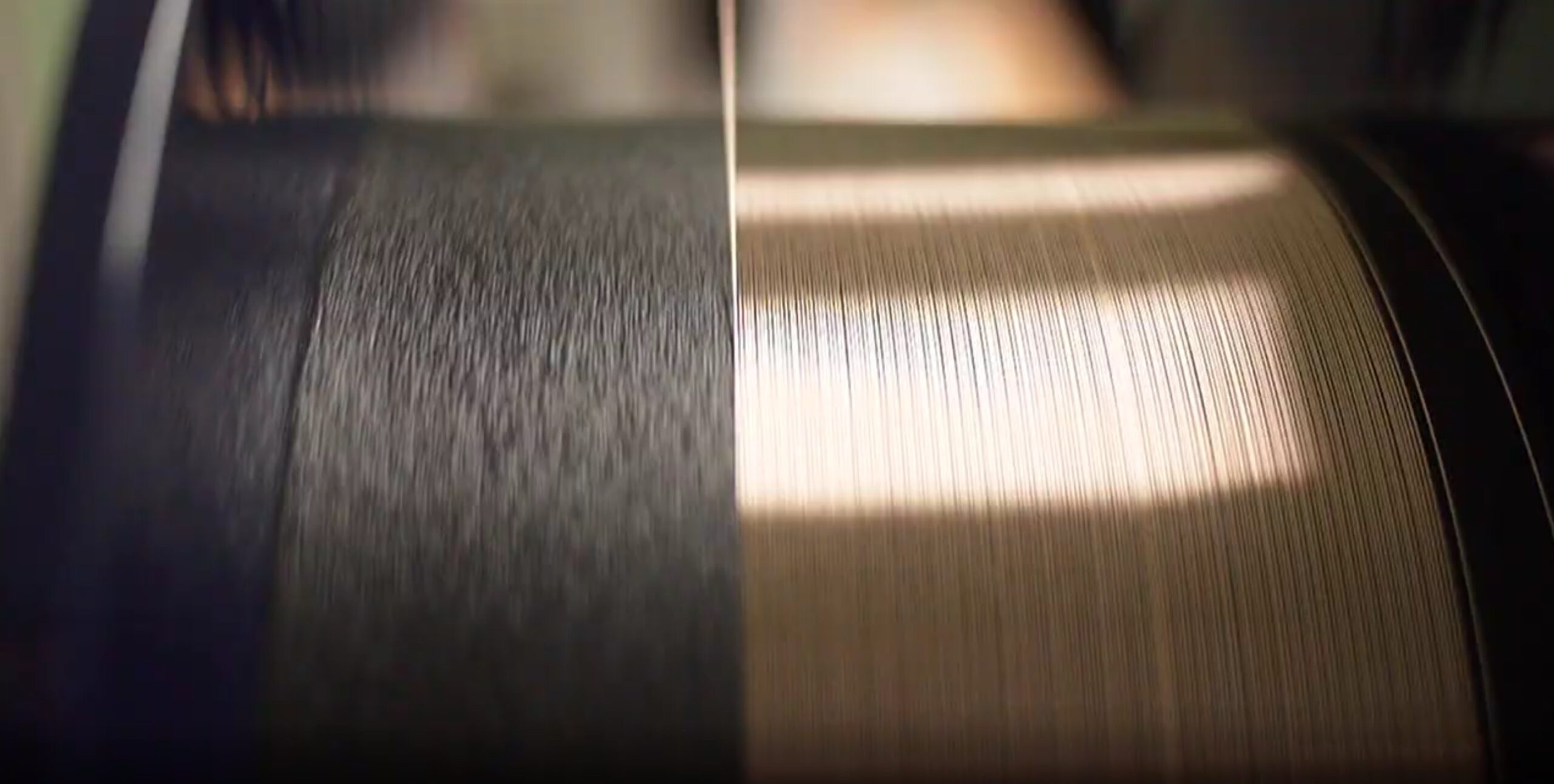
Industrial places face tough conditions that test regular monitoring tools. Places like power plants, offshore oil rigs, and tunnels need sensors that handle high heat, pressure, and electromagnetic noise. Optical fiber sensors are the solution to these problems.
The demand for industrial sensing fiber is growing fast. It’s valued at $2.48 billion in 2024 and expected to hit $4.65 billion by 2034. This growth shows how much companies trust harsh environment fiber for monitoring key infrastructure.
Nuclear power stations like Palo Verde and rail networks like Amtrak use fiber optic temperature systems to avoid equipment failures. These sensors spot issues early, preventing shutdowns or safety risks. Companies like RISE are creating special fibers that can monitor machines and structures for decades without needing to be replaced.
Modern industrial sensing fiber turns regular cables into advanced monitoring tools. One fiber strand can measure temperature, strain, and vibration over long distances. This makes harsh environment fiber perfect for pipelines, bridges, and electrical substations where sensor failure could cost millions.
Key Takeaways
- Industrial sensing fiber market will reach $4.65 billion by 2034 with 6.73% annual growth
- Optical fiber sensors work in nuclear plants, oil platforms, and high-voltage substations
- Fiber optic temperature systems prevent costly equipment failures and safety hazards
- RISE develops specialized fibers that last decades without recalibration
- Single fiber strands monitor temperature, strain, and vibration across kilometers
- Harsh environment fiber outperforms traditional sensors in extreme conditions
Understanding Industrial Sensing Fiber Technology
Industrial sensing fiber is a big step forward in monitoring important things in factories and industrial areas. It uses light to check for changes in temperature, pressure, strain, and vibration. This is different from old electrical sensors because it’s more accurate and doesn’t get affected by electrical problems.
The main parts of the sensing fiber work together to make a strong monitoring system. The heart of it is the optical fiber, which is the main sensor. Things like Fiber Bragg Gratings (FBG) and Fabry-Perot interferometers change light signals when the environment changes. Then, the interrogator units turn these signals into data that people can understand.
| Component Type | Function | Key Advantage |
|---|---|---|
| Optical Fiber Core | Light transmission pathway | No electromagnetic interference |
| FBG Sensors | Strain and temperature detection | Multiple sensing points per fiber |
| Interrogator Units | Signal processing and analysis | Real-time data conversion |
| Protective Sheathing | Environmental protection | Chemical and heat resistance |
What’s special about industrial sensing fiber is it can work safely in places where it could be dangerous. It doesn’t make sparks, so it’s great for places like oil refineries, chemical plants, and mines. It’s also small enough to fit in tight spots and can work over long distances.
Applications of Industrial Sensing Fiber
Fiber optic sensing technology changes how industries watch over their operations. These advanced sensors work well in extreme conditions. They are great for temperature sensing and keeping things under watch all the time.
The oil and gas industry is a big user of harsh environment fiber systems. Companies like Schlumberger and Halliburton use them deep underground. They can handle temperatures over 300°C and track pressure changes in huge pipeline networks.
Structural health monitoring is another key area. Big projects like bridges and tunnels use fiber sensors. For example, the Golden Gate Bridge uses them to spot tiny vibrations. This helps find problems before they get worse.
In manufacturing, fiber sensors check the quality of products. Boeing uses them to watch how aircraft parts cure. Steel mills also use them to keep an eye on furnace temperatures and save energy.
Healthcare is also seeing a lot of use of these sensors. They help with surgeries and keep an eye on the heart. Power plants and nuclear facilities also use them to check on turbines and electrical grids. These sensors work well even in places with lots of radiation.
Benefits of Optical Fiber in Industrial Settings
Industrial sensing fiber changes how factories and plants check on important systems. These sensors give precise measurements and can handle harsh conditions better than old equipment. Factories use these fibers to keep operations safe and efficient all the time.
EMI immunity is a big plus in electrical areas. Power plants and substations have strong electromagnetic fields that mess with copper sensors. But, fiber optic systems ignore these fields, giving accurate readings near big equipment. This natural resistance means no need for expensive shielding or isolation gear.
Fiber durability is impressive in tough spots. These sensors keep temperature accurate within ±0.1°C per year. They also have great measurement repeatability, staying at ±0.5°C. The cables can handle a lot of tension and bending without breaking.
Silica fibers also resist many harmful substances like oils, acids, solvents, and UV radiation. They don’t lose their quality over time.
| Performance Metric | Fiber Optic Sensors | Traditional Sensors |
|---|---|---|
| Temperature Drift | ±0.1°C/year | ±2-5°C/year |
| Maintenance Interval | 5-15 years | 1-2 years |
| EMI Resistance | Complete immunity | Requires shielding |
| Weight (per 100m) | 2-5 kg | 15-30 kg |
Lightweight makes industrial sensing fiber perfect for aerospace. Aircraft makers use it to check engine and fuel system conditions, and structural stress without adding weight. Plants can go years without needing maintenance, cutting down on downtime and labor costs.
Choosing the Right Fiber for Your Needs
Choosing the right fiber starts with knowing what you need. Each job has its own set of requirements, like how well it can handle heat or chemicals. Companies like RISE Fiberlab have over 25 years of experience. They help when regular fibers just aren’t enough.
When picking a fiber, consider these important factors:
- Operating temperature ranges (standard fibers work at 85°C while specialty optical fiber handles up to 300°C)
- Environmental conditions such as humidity levels (tested at 85°C with 85% relative humidity)
- Chemical exposure requirements
- Mechanical stress and vibration tolerance
Intrinsic sensors use the fiber itself for sensing. This makes them very durable. Extrinsic setups offer other ways to meet specific needs.
Advanced coatings improve fiber performance in tough conditions. Materials like graphene oxide and polyimide make fibers last longer. These fibers are designed to last over 25 years, which is key for oil and gas applications.
Working with experienced makers ensures you get fibers made just for you. The selection process looks at both short-term needs and long-term reliability. This protects your investment and keeps measurements accurate over time.
Installation Methods for Sensing Fibers
Getting sensing fibers installed right is key to their success in different settings. Whether it’s in power substations or oil pipelines, each place needs its own way to install. This ensures the fiber stays safe and works well.
Direct burial is a top choice for many. It keeps fibers safe from damage and lets them monitor over long distances, like more than 30 miles. Cables are buried 2 to 4 feet deep, based on frost lines and local rules. This method guards against weather and tampering, saving on upkeep costs.
Surface mounting is great when you need to get to the fiber fast. It makes fixing and updating easier but needs extra protection. UV-resistant conduits and armored cables shield against sunlight and physical harm. Amtrak, for example, uses it in tunnels for quicker checks.
Important things to keep in mind during installation include:
- Minimum bend radius of 20 times the cable diameter
- Maximum pulling tension under 600 pounds
- Temperature range compatibility from -40°F to 185°F
- Vibration resistance meeting IEC 60068 standards
Before starting, field tests check each installation. Technicians use optical time-domain reflectometry to check signal quality. Shock tests up to 50g also ensure the system can handle industrial shakes. These steps make sure the system works well in tough places, watching over important infrastructure all the time.
Maintenance of Industrial Sensing Fiber Systems
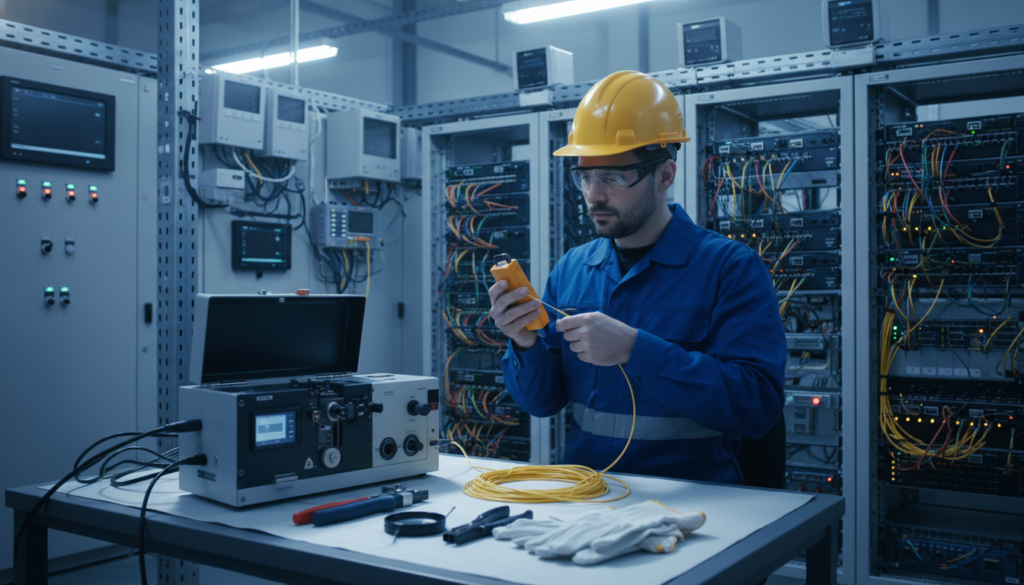
Keeping industrial sensing fiber systems in top shape is key. They face tough conditions like extreme temperatures, moisture, and mechanical stress. Regular maintenance is essential.
Each fiber sensing technology has its own upkeep needs. For example, Fiber Bragg Grating (FBG) systems need recalibration every 5 to 10 years. Distributed Temperature Sensing (DTS) systems can go 10 to 15 years without major service. Fluorescence-based sensors, on the other hand, require little maintenance, making them perfect for remote areas.
Regular testing is vital to catch issues early. Technicians check several important factors to ensure everything works well:
- Signal attenuation rates (should stay below 0.02 dB/km annually)
- Coating integrity checks for physical protection
- Sensor drift measurements from refractive index changes
- Interrogator wavelength stability
- Alarm response accuracy
Reliability testing simulates years of wear in controlled settings. Engineers test harsh environment fiber using specific protocols:
| Test Type | Temperature Range | Duration | Purpose |
|---|---|---|---|
| High-Temperature Exposure | 85°C – 300°C | 1,000 – 10,000 hours | Coating stability verification |
| Thermal Cycling | -40°C to +150°C | 500 – 2,000 cycles | Expansion stress testing |
| Humidity Testing | 85% RH at 85°C | 1,000 – 5,000 hours | Moisture resistance check |
Continuous monitoring tracks performance trends over time. Smart maintenance programs analyze drift patterns, failure statistics, and alarm consistency. This helps predict when components need attention before problems arise.
Innovations in Fiber Optic Technology
The world of industrial sensing fiber is changing fast. New fiber innovations are changing how industries check and keep their operations running. AI-driven drift detection helps engineers spot system changes before they fail. Digital twin technology simulates how photonics technology ages, making predictions more accurate than ever.
Distributed Fiber Optic Sensing (DFOS) is a big step forward in monitoring. These systems can track temperature and sound changes over long distances. A single fiber cable can replace thousands of traditional sensors, cutting down on costs and upkeep.
| Innovation Type | Key Benefit | Industrial Application |
|---|---|---|
| AI Drift Detection | 30% faster fault prediction | Pipeline monitoring |
| DFOS Systems | 10km continuous coverage | Power grid surveillance |
| Multi-parameter Testing | 85% accuracy improvement | Structural health monitoring |
| Compact Laser Sources | 50% better signal clarity | Chemical plant sensors |
New advances in sensing include testing for multiple parameters at once. Smaller lasers now send clearer signals with less noise. Predictive maintenance analytics, powered by Weibull and Arrhenius models, help extend equipment life. These technologies make monitoring harsh environments safer and cheaper for companies in America.
Comparisons with Traditional Sensors
In industrial settings, the choice between optical and electrical sensors is key. Fiber optic technology shines in harsh environments. It works without electricity, perfect for places with high voltages, strong magnetic fields, and corrosive air.
Looking at how well they perform, fiber optics stand out. They keep signals clear, with little loss over time. In contrast, electrical sensors degrade, affecting their accuracy. Fiber optics also handle extreme temperatures well, from -40°C to +150°C.
| Performance Factor | Fiber Optic Sensors | Electrical Sensors |
|---|---|---|
| Electromagnetic Immunity | Complete immunity | Susceptible to interference |
| Temperature Range | -40°C to +150°C | -20°C to +85°C |
| Chemical Resistance | Resistant to oils, acids, solvents | Limited resistance |
| Replacement Frequency | Decades of service | 3-5 year cycles |
When comparing, it’s clear that fiber optics last much longer. They keep their quality for decades, unlike electrical sensors that need replacing every few years. Fiber optics also resist damage from industrial chemicals, unlike copper wiring.
Case Studies of Successful Implementations
Real-world case studies highlight how industrial sensing fiber changes the game in critical infrastructure monitoring. These stories come from various sectors where reliability and precision are key.
In aerospace applications, Boeing and Airbus use fiber optic sensors in their aircraft systems. These sensors are light and track the health of wings and fuselages. They also monitor engine temperatures up to 1,200°F. This helps spot micro-cracks early, cutting maintenance costs by 30%.
Renewable energy monitoring benefits from fiber optic tech for top-notch performance. Vestas wind farms use it to check blade conditions across 2,500 turbines worldwide. Solar facilities like Ivanpah Solar Electric Generating System use sensors to watch panel temperatures and find hot spots that could lower efficiency.
| Industry Sector | Application | Performance Improvement |
|---|---|---|
| Aerospace (Boeing 787) | Structural health monitoring | 40% reduction in inspection time |
| Wind Energy (Vestas) | Blade condition assessment | 25% increase in turbine uptime |
| Mining (LKAB Sweden) | Acoustic characterization | 50% better rock stability prediction |
| Steel Production (SSAB) | Temperature monitoring | 15% reduction in raw materials |
The Malmberget iron ore mine in Sweden shows how industrial sensing fiber changes underground work. Distributed Acoustic Sensing technology maps rock formations 1,500 meters deep. This gives data that old sensors can’t match. Swedish steel producer SSAB cut material waste by using fiber optic temperature monitoring in their lines.
Challenges Facing Industrial Sensing Fiber
Industrial facilities pose big challenges for fiber optic sensing systems. Harsh environment fiber installations deal with constant temperature changes. These changes make materials expand and contract, weakening the fiber over time.
But temperature isn’t the only issue. High humidity in plants lets moisture into the fibers. Chemical vapors from industrial activities also damage the protective coatings. Plus, vibrations from heavy machinery can cause the fibers to fatigue and lose their alignment.
Money is also a big problem for many looking into fiber optic sensing. The costs include special equipment, custom cables, and professional installers. Small and medium businesses often find it hard to pay for these upfront costs, even though they offer long-term benefits.
| Challenge Type | Impact on System | Mitigation Cost Range |
|---|---|---|
| Thermal Stress | Coating degradation | $5,000 – $15,000 |
| Chemical Exposure | Material corrosion | $8,000 – $25,000 |
| Mechanical Vibration | Alignment drift | $3,000 – $12,000 |
| Moisture Ingress | Signal attenuation | $4,000 – $18,000 |
There’s also a lack of technical knowledge. Many places don’t have people who know how to maintain fiber optics. Setting up fiber with existing systems requires special programming skills. And, not many know how to spot early signs of problems like hydrogen-induced losses.
Regulatory Standards and Compliance
It’s vital to meet regulatory standards when using industrial sensing fiber in key areas. These rules help ensure safe and reliable use in fields like energy and aerospace.
Important international standards guide the use of industrial sensing fiber:
- IEC 61757 sets performance criteria for fiber optic sensors
- IEC 60068 outlines environmental testing protocols
- Telcordia GR-20 and GR-326 specify reliability benchmarks for fibers and connectors
- IEEE 1613 addresses harsh power utility environments
- ISO 9001 ensures quality management systems
Different areas have their own rules based on their needs. European markets follow strict safety standards, driving modernization. North America’s compliance rules influence global adoption, mainly in defense and energy.
Following these standards has many benefits. Certified products can enter global markets more easily. Standardization helps engineers compare data from different makers. Most importantly, it keeps workers and equipment safe in dangerous places.
Industrial sensing fiber systems must pass tough tests to show they meet standards. They’re checked for environmental resistance, signal accuracy, and long-term stability. Companies with detailed records and testing results find certification easier. Regular audits keep them up to date with new standards and technologies.
The Future of Industrial Sensing Using Fiber
The harsh environment fiber market is growing fast. Industries see its value and are investing more. By 2034, it’s expected to reach USD 4,650.38 million, up from USD 2,480.6 million in 2024.
Companies like Corning and Prysmian Group are leading the way. They’re focusing on future sensing technology. This is to meet the growing need for reliable solutions in various industries.
Smart monitoring systems are changing how cities and industries work. Places like Singapore and Barcelona use fiber optic sensors. They track traffic, water quality, and energy usage in real time.
AI integration helps these systems predict failures before they occur. Shell and BP use this in their refineries. It cuts downtime by 30 percent.
The use of fiber sensors with machine learning makes operations smarter and safer. This is a big step forward.
New materials and techniques are making future sensing technology even better. Scientists at MIT and Stanford are working on sensors that are ten times more sensitive. These will help monitor the environment better.
These advancements will also help with air quality, earthquake detection, and weather tracking. The data from these sensors will be analyzed instantly by AI integration. This is part of Industry 4.0.
The next decade will see even more exciting developments. Quantum sensing will allow for the detection of tiny changes. Medical devices will also get better, monitoring patient health with high accuracy.
As costs go down and capabilities rise, fiber optic sensing will become common. It will be used in factories, hospitals, and urban infrastructure across America.
FAQ
What makes fiber optic sensors better than traditional electrical sensors in harsh environments?
Fiber optic sensors have big advantages over electrical sensors in tough spots. They don’t get affected by electromagnetic interference, which is key in places with lots of electrical noise. They can work in extreme temperatures, from -40°C to +150°C, and in corrosive atmospheres without losing signal strength.
Unlike electrical sensors, they don’t need to be replaced often. They can last over a decade with only occasional recalibration, every 5-15 years.
How long do industrial sensing fiber systems typically last?
Industrial sensing fiber systems are built to last a long time. RISE Fiberlab aims for a fiber lifetime of more than 25 years for DTS systems. FBG systems need recalibration every 5-10 years, and DTS systems every 10-15 years.
Fluorescence sensors need very little upkeep. With the right setup and protection, these systems can go without maintenance for over a decade. This makes them perfect for use in critical infrastructure.
What industries benefit most from harsh environment fiber technology?
Many important industries use fiber optic sensing technology. The oil and gas sector uses it for exploration, drilling, and monitoring pipelines and reservoirs in harsh conditions. Power plants and high-voltage substations rely on it for temperature and strain monitoring.
Infrastructure projects like bridges, tunnels, and dams use it for continuous monitoring. The aerospace industry values its lightness for monitoring aircraft structures and engines. Healthcare uses it for endoscopy and catheter-based sensing.
What environmental conditions can industrial sensing fibers withstand?
Industrial sensing fibers are very tough. They can handle temperature changes from -40°C to +150°C and high-temperature aging tests at 85-300°C for 1,000-10,000 hours. They also pass humidity tests at 85°C/85% RH and chemical tests with oils, acids, and solvents.
They stay stable under UV light and can handle tensile loads of 1,000-3,000 N. Shock and vibration tests show they can handle up to 50g and follow IEC 60068 standards.
How much does the fiber optic sensing market expect to grow?
The fiber optic sensing market is growing fast. It’s valued at USD 2,480.6 million in 2024 and is expected to reach USD 4,650.38 million by 2034. This growth is driven by smart cities, IoT, Industry 4.0, environmental monitoring, and renewable energy like wind turbines and solar plants.
What are the main components of a fiber optic sensing system?
A fiber optic sensing system has several key parts. The optical fiber is the sensing medium, and sensing elements like FBG, Raman, phosphor, or Fabry-Perot devices detect specific parameters. Connectors and splices keep the signal going.
The interrogator units process signals and turn optical data into information we can read. Protective cables and sheathing keep the fibers safe from damage and environmental factors, ensuring they work well in harsh conditions.
What installation methods work best for industrial sensing fiber?
There are two main ways to install industrial sensing fibers. Direct burial protects fibers from damage and keeps them working over long distances, making it great for pipelines and infrastructure. Surface mounting is easier to maintain but needs extra protection from UV and mechanical damage.
Both methods must consider the minimum bend radius, tensile load limits, and the risk of micro-crack propagation to ensure the fibers work well and last long.
What regulatory standards apply to fiber optic sensors in industrial applications?
Several international standards guide the use of fiber optic sensors. IEC 61757 sets performance standards, while IEC 60068 covers environmental testing. Telcordia GR-20/GR-326 focus on fiber and connector reliability for telecommunications. IEEE 1613 is important for substation applications.
ISO 9001 ensures quality management for consistent, auditable results. Following these standards helps products meet international safety and performance standards, supporting global trade and certification.
Explore
IVG fiber technologies