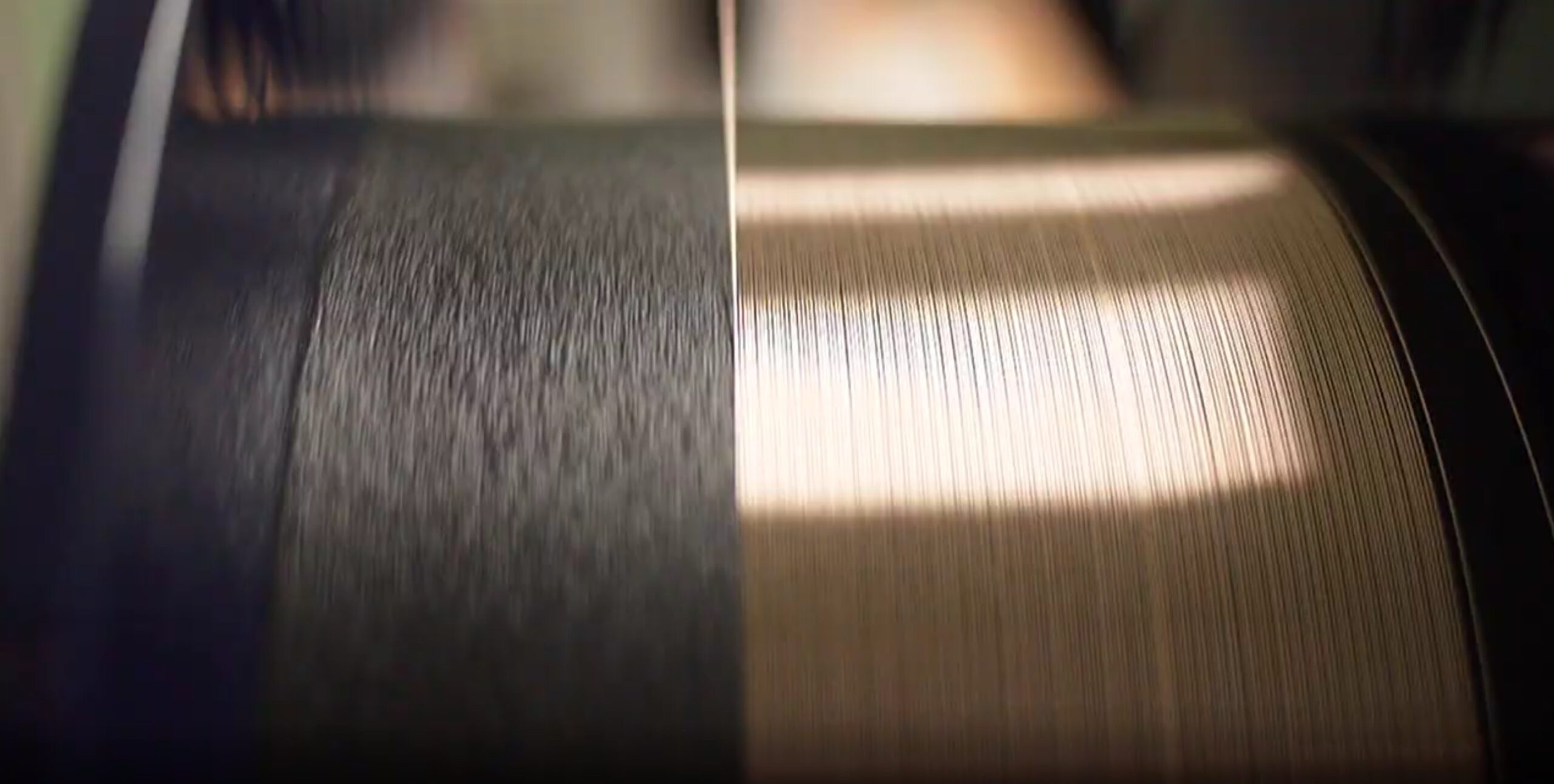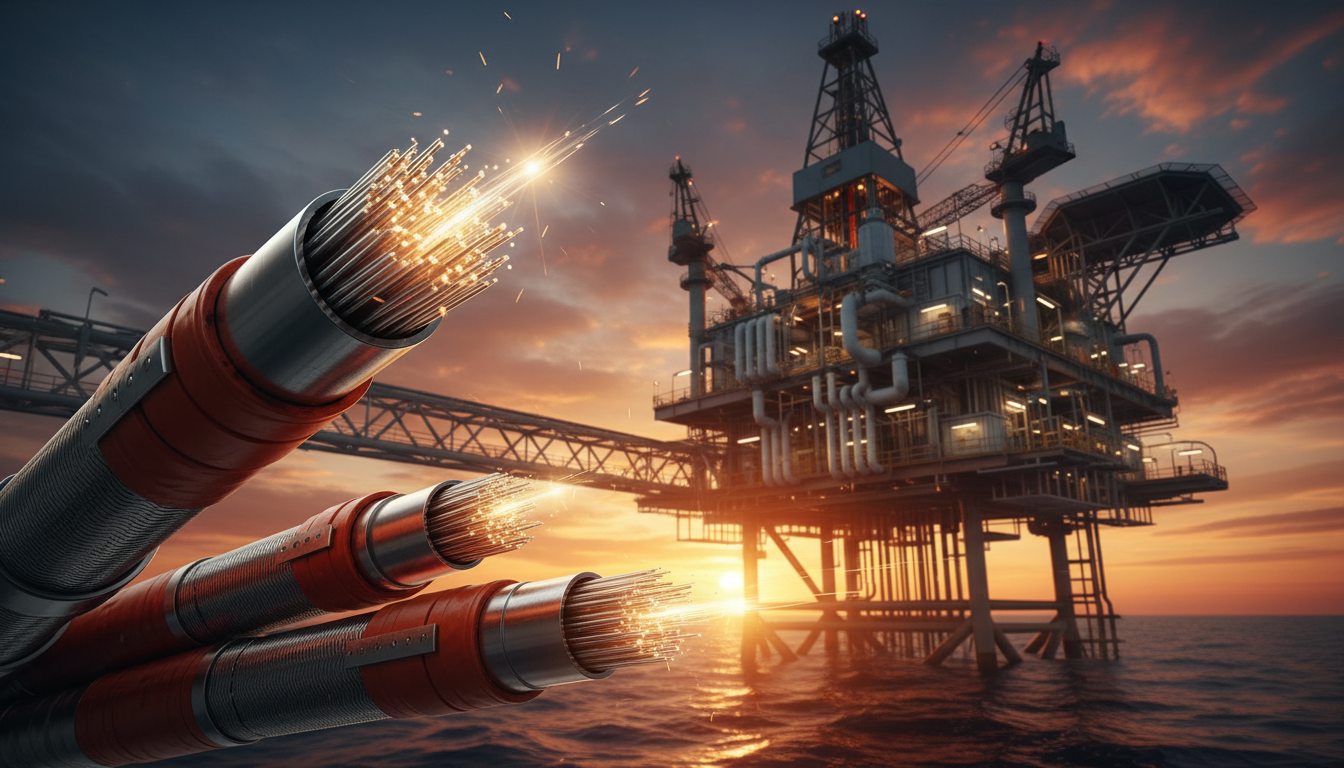
The energy sector works in extreme conditions deep underground. Companies like Halliburton and Schlumberger use fiber optic technology for communication. These cables must handle temperatures up to 350 degrees Fahrenheit and huge pressures thousands of feet down.
Traditional copper wiring can’t handle today’s drilling conditions. Corrosive chemicals, heat, and pressure damage it quickly. Oil and gas fiber systems are more durable. Shell and ExxonMobil use them for deepwater drilling and refineries.
Fiber optic technology changes how energy companies monitor their operations. It detects small temperature changes and measures strain. BP uses these cables to watch its Gulf of Mexico operations, where a failure could cost millions.
The move from copper to optical fiber is a big step for the petroleum industry. These systems last much longer than copper in harsh conditions. Chevron says its fiber installations last ten times longer than copper in tough environments.
Key Takeaways
- Fiber optic cables withstand temperatures above 350°F and extreme pressure conditions
- Major companies like Shell and ExxonMobil rely on optical fiber for critical operations
- Oil and gas fiber systems last ten times longer than copper wiring in harsh environments
- Real-time monitoring capabilities prevent costly equipment failures and production delays
- Harsh environment cables resist corrosive chemicals found in drilling and refining operations
- Fiber optic technology enables data transmission from sensors placed miles underground
Understanding the Role of Fiber Optics in Oil and Gas Industry
Fiber optics have changed the oil and gas industry. They bring real-time monitoring to tough environments. These thin glass strands carry light signals, unlike electricity, making them safe for dangerous sites.
A downhole fiber optic cable is like the nervous system of drilling. It sends data like temperature, pressure, and seismic info from deep underground. Engineers can see these changes live, spotting problems early.
- Measuring temperature changes along the entire length of a well
- Detecting vibrations that might signal equipment wear
- Monitoring pressure variations during extraction
- Tracking flow rates to optimize production
Fiber optics improve safety by working without electricity at the sensing point. This reduces explosion risks in flammable areas. If a pump fails or a pipe cracks, fiber sensing systems alert operators right away.
Production efficiency increases with these advanced monitoring networks. Wells with downhole fiber optic cable technology produce more oil with fewer shutdowns. Operators can adjust drilling angles, pump speeds, and extraction rates based on live data.
Advantages of Optical Fiber Over Traditional Wiring
Optical fibers outshine copper in harsh oil and gas settings. They block electromagnetic interference from big machines and power systems. This means data stays safe near drilling gear and high-voltage areas.
These cables also have big cost savings. They cut installation costs by up to 60% compared to copper. Platform engineers love the lighter weight, which is key on offshore rigs where every pound counts. A single fiber cable can replace copper bundles over 100 pounds, yet carry the same data.
Signal quality is top-notch over long distances. Copper cables lose signal after 300 feet, but fiber optics keep it clear for miles. This is super useful for linking remote wellheads to control rooms.
Safety is a big deal in explosive areas. Fiber cables don’t spark because they send light, not electricity. This safety feature is perfect for places like refineries and gas plants where sparks can cause big problems.
The cables are also super flexible. This makes them easy to install in complex pipeline systems. Technicians can bend them around tight spots and obstacles, making setup faster and cheaper during upgrades.
Key Characteristics of Oil and Gas Fiber Optics
Optical fibers for oil and gas must be very durable. They can handle extreme temperatures, from freezing cold to over 300°C in geothermal wells. High temperature fiber oil gas systems use special materials like polyimide coatings. These protect the glass core from damage caused by heat.
Deep drilling requires pressure resistant cable technology. Modern fiber optic cables can handle pressures over 20,000 PSI. They are built to prevent signal loss, even under intense mechanical stress.
| Property | Standard Fiber | Oil & Gas Fiber |
|---|---|---|
| Temperature Range | -20°C to 85°C | -40°C to 300°C+ |
| Pressure Rating | 100 PSI | 20,000+ PSI |
| Chemical Protection | Basic polymer | Metal/polyimide coating |
Chemical resistant fiber technology guards against harmful substances. Metal sheathing and special polymer barriers offer protection. These systems keep signals clear for years, even in harsh oil and gas environments.
Types of Optical Fiber Used in Oil and Gas
The oil and gas industry uses special fiber optic cables for tough conditions. These cables are made for drilling, monitoring pipelines, and working on offshore platforms.
Single-mode fiber is great for sending data long distances without losing the signal. It has a narrow core that lets light travel straight. This makes it ideal for connecting offshore rigs to land-based facilities, covering hundreds of miles. Companies like Corning make single-mode fiber that keeps signals clear, even underwater.
Multi-mode fiber is better for shorter distances inside buildings. It has a bigger core that lets light travel in different paths. This makes it easier to install and cheaper. AFL Global makes multi-mode fiber for linking control rooms to equipment or sensors on platforms.
Specialty optical cables are super tough. Prysmian Group makes fibers that resist hydrogen damage in wells. Verrillon’s metal-coated cables can handle temperatures up to 752°F (400°C), beating regular cables.
“In downhole applications, we’ve seen specialty fibers operate reliably for over 10 years in temperatures that would melt conventional electronics.” – Industry veteran from Baker Hughes
Choosing between single-mode, multi-mode, and specialty cables depends on the distance, environment, and cost. Each type has its own benefits for the harsh oil field.
Installation and Maintenance Best Practices
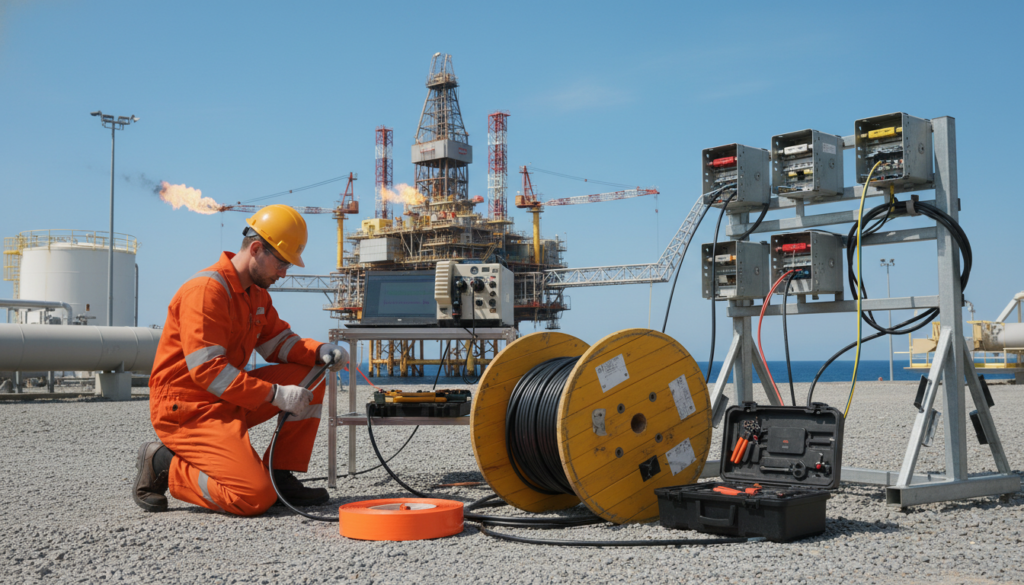
Getting fiber optic systems right in oil and gas needs the right fiber installation methods. For permanent setups, cables are cemented into wells during completion. This lets them monitor temperature and pressure changes over time. For temporary needs, coiled tubing or wireline units are used for quick data gathering.
Keeping cables in good shape is key to avoiding big problems. Field techs do OTDR tests every month to catch issues early. These tests check for damage by looking at light reflections.
- Connector contamination from drilling fluids
- Micro-bending losses caused by excessive pressure
- Hydrogen darkening in high-temperature zones
- Physical damage during spooling operations
Handling cables with care is important. Crews follow strict rules to avoid damaging the fibers. They also use special tools to connect cables in hazardous areas. Technicians get special training for these tasks.
Regular checks help avoid unexpected problems. Visual checks look for damage, and advanced tests check signal quality. Keeping connections clean is also vital in dirty environments.
Future Trends in Optical Fiber Technology
The oil and gas industry is on the brink of a big change. New fiber optic technologies are changing how we watch over wells, pipelines, and refineries. These changes aim to make operations safer and protect the environment better.
Distributed acoustic sensing is a big leap forward in smart oil fields. It turns regular fiber cables into thousands of virtual microphones. This lets pipeline operators spot leaks fast and find their exact spot. BP and Shell have started using this in big pipeline networks, cutting response times by up to 70%.
Artificial intelligence is now teaming up with fiber sensors to forecast equipment failures. Algorithms look at vibration data from fiber cables around pumps and compressors. Chevron‘s Gulf of Mexico platforms use this tech to plan maintenance only when it’s really needed, cutting downtime in half.
The Internet of Things links fiber networks to make drilling systems fully automated. Data flows from downhole sensors through fiber cables to control centers far away. Engineers can tweak drilling settings right away, boosting efficiency and keeping workers safe.
Also, making fiber cables is getting greener. Companies like Corning now make cables using 40% less energy than before. They use recyclable materials instead of old plastics for coatings. These green steps help oil companies cut carbon emissions while keeping operations top-notch in smart oil fields around the world.
Regulatory Standards and Compliance
The oil and gas sector needs strict rules to keep operations safe in tough environments. Fiber optic cables in drilling, refineries, and pipelines must follow tough standards. These come from groups like the American Petroleum Institute (API) and the International Electrotechnical Commission (IEC).
API sets clear rules for fiber optic cables in oil facilities. These rules cover how well cables handle heat, chemicals, and physical stress. IEC 60079 deals with gear for explosive areas, and API RP 14F guides electrical systems on offshore platforms.
Safety rules protect people and gear in dangerous places. Important certifications include:
- ATEX certification for European Union operations
- NACE International standards for corrosion resistance
- ISO 13628-6 for subsea production control systems
- UL listings for North American installations
Rules change a lot from place to place. Texas has its own rules, different from those in the Gulf of Mexico. Companies working worldwide face many rules but must keep safety standards the same.
“Proper certification isn’t just paperwork—it’s the foundation of operational integrity in high-risk environments.”
To follow these safety rules, companies need to keep detailed records. They must document cable specs, how cables were installed, and test results. This is to show they meet standards during checks.
Case Studies: Successful Implementations
Major oil companies have made big changes by using fiber optics. These stories show how smart choices in fiber optics bring big wins in tough places.
Shell’s work in the Gulf of Mexico is a great example. They use fiber optics to watch over 15 wells. This helps them catch problems early, saving a lot of money.
BP’s work in Alaska is another success story. Their fiber optic system paid off in just 18 months. It found small leaks before they caused big problems, saving them a lot of money.
| Company | Location | Investment | Payback Period | Annual Savings |
|---|---|---|---|---|
| Shell | Gulf of Mexico | $12 million | 14 months | $9.2 million |
| BP | Alaska | $8 million | 18 months | $5.3 million |
| Chevron | Kazakhstan | $15 million | 22 months | $8.1 million |
| ExxonMobil | Permian Basin | $10 million | 16 months | $7.5 million |
Chevron’s Tengiz field in Kazakhstan saw a big drop in equipment failures. Fiber optics let them keep an eye on things all the time. This led to better production and longer-lasting equipment, inspiring others in Central Asia.
Comparing Costs: Fiber Optics vs. Conventional Solutions
Fiber optic costs for oil and gas operations might seem high at first. They often need 20-30% more money than copper cables. But, a closer look shows a different picture.
Looking at the long term, fiber optics shine. They can last over 25 years with little wear. Copper cables can’t match this in tough environments. This long life makes the extra cost worth it for many.
| Cost Factor | Fiber Optic Systems | Copper Cable Systems |
|---|---|---|
| Initial Installation | $45,000 – $60,000 per mile | $35,000 – $45,000 per mile |
| Annual Maintenance | $500 – $1,000 | $2,500 – $4,000 |
| Signal Repeaters Needed | None for distances under 40 miles | Every 2-3 miles |
| Power Consumption | 65% less than copper | Standard consumption |
Smart investment analysis looks at savings too. Fiber systems don’t need repeaters over long distances. They use much less power and need less upkeep. Most companies find fiber costs even out within 3-5 years, thanks to these savings. This is true for offshore and remote areas where access is hard.
Conclusion: The Future of Optical Fiber in Oil and Gas
The future of fiber optics in oil and gas is looking up. Companies like Shell and ExxonMobil have shown fiber optics work well in tough conditions. They can handle high temperatures and pressures without breaking.
This makes them safer than copper wiring. It’s a big reason to switch to fiber optic cables.
When companies see benefits, they adopt new technology faster. BP saw a 40% drop in downtime after using fiber optics in the Gulf of Mexico. Chevron got similar results in California.
These stories motivate others to update their systems. It’s a big step towards digital transformation in the industry.
Smart companies start small before going big. They check their equipment and plan upgrades carefully. This way, they avoid big problems and get the most benefits.
Switching to fiber optics is not just a trend. It’s about staying ahead in a fast-changing market.
Digital transformation in oil and gas needs advanced monitoring. Fiber optics are key for collecting and analyzing data in real-time. Companies that don’t adopt fiber optics risk falling behind.
The message is clear: start using fiber optics now to stay competitive.
FAQ
What makes downhole fiber optic cable better than copper wiring for oil and gas operations?
Downhole fiber optic cables are better than copper wiring in many ways. They don’t get affected by electromagnetic interference. They can send data over long distances without losing signal strength.
They also don’t spark in explosive areas. Fiber optics are lighter, which lowers installation costs and reduces the load on platforms. They work well in extreme temperatures, from -40°C to over 300°C.
How do high temperature fiber oil gas cables handle extreme downhole conditions?
High temperature fiber cables for oil and gas use special materials. They can handle temperatures over 400°C. These cables keep working even when temperatures change a lot.
They can also handle high pressures in deep wells. Companies like Corning, AFL Global, and Prysmian Group make these fibers. They use advanced layers to protect against hydrogen sulfide, carbon dioxide, and drilling fluids.
What are the main applications of fiber optics in oil and gas operations?
Fiber optics are used for many important tasks. They help with temperature sensing, pressure monitoring, and seismic data collection. They also help in detecting pipeline leaks and improve communication in dangerous areas.
They allow for constant monitoring of well conditions and flow rates. These systems are key for advanced drilling and understanding reservoirs.
How long do fiber optic systems typically last in oil and gas environments?
Fiber optic systems in oil and gas can last over 25 years. This is thanks to regular testing and proper handling. They are also made to resist hydrogen for long-term use.
They last much longer than copper systems in similar conditions.
What’s the return on investment for switching to fiber optic systems?
Switching to fiber optic systems might cost 20-30% more at first. But, studies show you can get your money back in less than two years. This is because they reduce downtime and improve production.
They become more cost-effective in 3-5 years. This is due to lower maintenance costs and less power use. They also prevent expensive well interventions and equipment failures.
What safety standards apply to fiber optic cables in oil and gas installations?
API standards guide fiber optic cable use in oil and gas. IEC standards cover environmental testing and performance. ISO and NACE provide certifications for reliability and safety in hazardous areas.
Local regulations also apply, ensuring safety and environmental compliance in explosive environments.
Can existing oil and gas infrastructure be retrofitted with fiber optic systems?
Yes, you can add fiber optic systems to existing infrastructure. This is done through phased plans. Installation methods include cementing for permanent monitoring and temporary deployment for interventions.
Fiber cables are designed to fit complex systems and tight spaces. Companies should plan carefully, considering installation complexity and environmental needs.
What emerging technologies are being integrated with fiber optic systems in oil and gas?
The industry is exploring new technologies. AI is being used for predictive maintenance through pattern recognition in sensor data. IoT supports autonomous drilling, and quantum sensing offers high accuracy for reservoir characterization.
Distributed acoustic sensing is changing pipeline monitoring and leak detection. Sustainable manufacturing aims to reduce energy use and use recyclable materials in fiber production.
Explore
IVG fiber technologies